
NZ Media News
Back to latest



Auckland's Urban Shift: Density Focus Reshapes Consumer Landscape
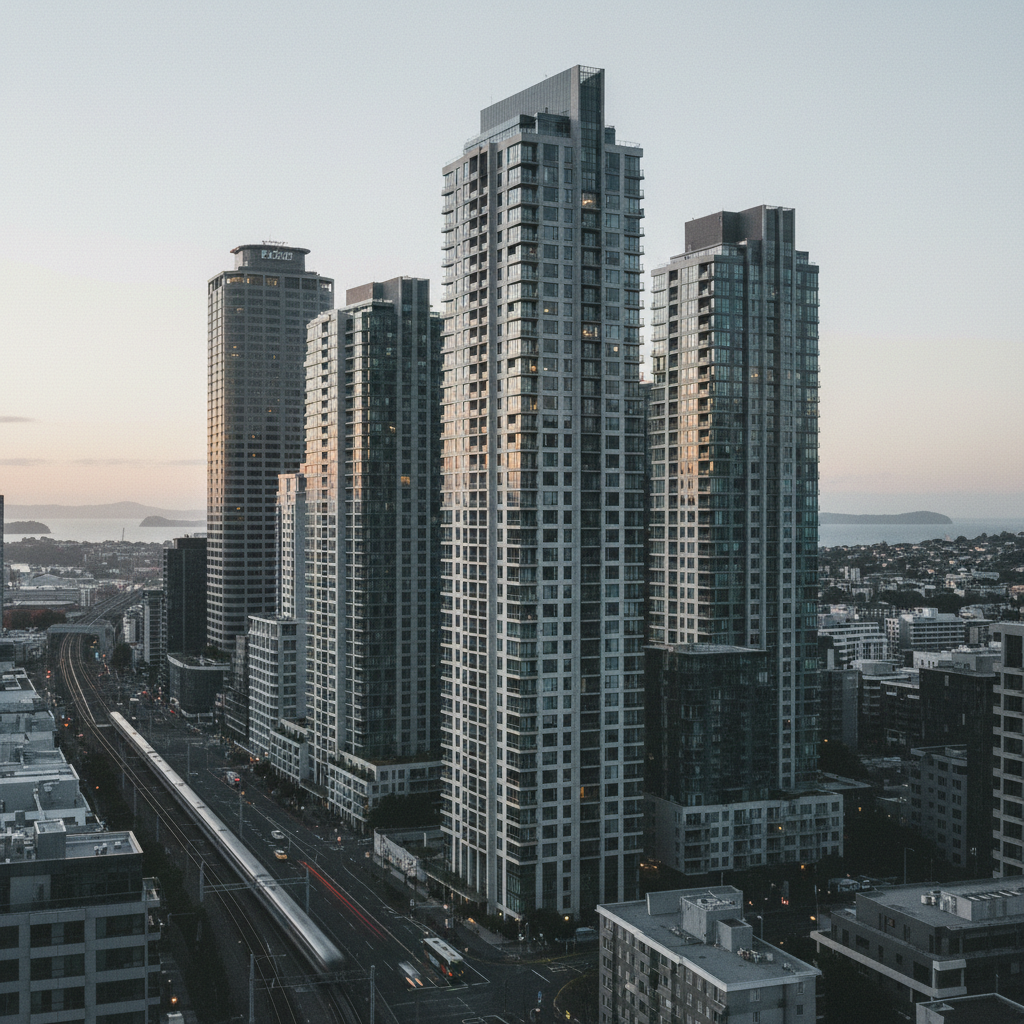
Auckland is implementing a long-term strategy to increase housing density around transport hubs while limiting urban sprawl. This policy aims to create a more compact, transit-oriented city, fundamentally altering residential patterns and consumer access.
What Happened
- •Auckland Council is prioritising high-density housing developments near public transport corridors.
- •The plan reduces the expansion of housing into peripheral, fringe areas.
- •The policy seeks to establish clear, consistent long-term rules for housing and transport development.
- •Councillor Richard Hills emphasised the need for enduring urban planning strategies.
- •This initiative is part of a broader effort to manage Auckland's growth sustainably.
- •The policy was reported on 31 March 2026 by NZ Herald - Business.
Why It Matters for NZ Marketers
- •Increased urban density will concentrate consumer populations in specific corridors, impacting local commerce.
- •Marketers must reassess geographic targeting for retail, services, and local advertising campaigns.
- •The shift away from fringe development could reduce demand for products and services catering to suburban expansion.
- •Changes in commuter patterns due to transit-oriented development will influence OOH and DOOH placement effectiveness.
- •Retailers may need to adapt store formats and locations to serve denser, more walkable neighbourhoods.
- •This policy signals a long-term commitment to a different kind of urban living for Aucklanders.
Strategic Implications
- •Re-evaluate audience segmentation based on new urban typologies (e.g., 'transit-adjacent consumers').
- •Invest in hyper-local digital and physical marketing strategies targeting specific high-density zones.
- •Consider partnerships with public transport providers or local community groups in growth areas.
- •Analyse foot traffic and public transport usage data to inform media spend and location-based promotions.
- •Develop flexible retail strategies, including smaller format stores or pop-ups, for dense urban centres.
- •Review supply chain logistics and delivery models to efficiently serve concentrated urban populations.
Future Trend Signals
- •The ongoing rise of '15-minute city' concepts, where amenities are within a short walk or cycle.
- •Increased importance of location-based data and geo-fencing for marketing effectiveness.
- •A potential resurgence of local main street retail and services in newly dense areas.
- •Greater demand for sustainable and compact living solutions, influencing product development and messaging.
Sources
Editorial note: This analysis is original, AI-assisted editorial content. All source material is attributed with links. No full articles are reproduced. Short excerpts are used under fair dealing principles.
Related Analysis
More posts sharing similar topics
Retail MediaAI & Commerce
Global Retail Contraction Looms: Implications for NZ Marketers
Retail MediaAI & Commerce
RBNZ Softens Stance on Cash Access, Signalling Evolving Payment Landscape
Retail MediaAI & Commerce
Fuel Costs Drive Accelerated EV Adoption in New Zealand
Retail MediaAI & Commerce
Targeted Fuel Relief: A New Era of Fiscal Prudence for NZ Consumers
Retail MediaAI & Commerce