

NZ Media News
Back to latest


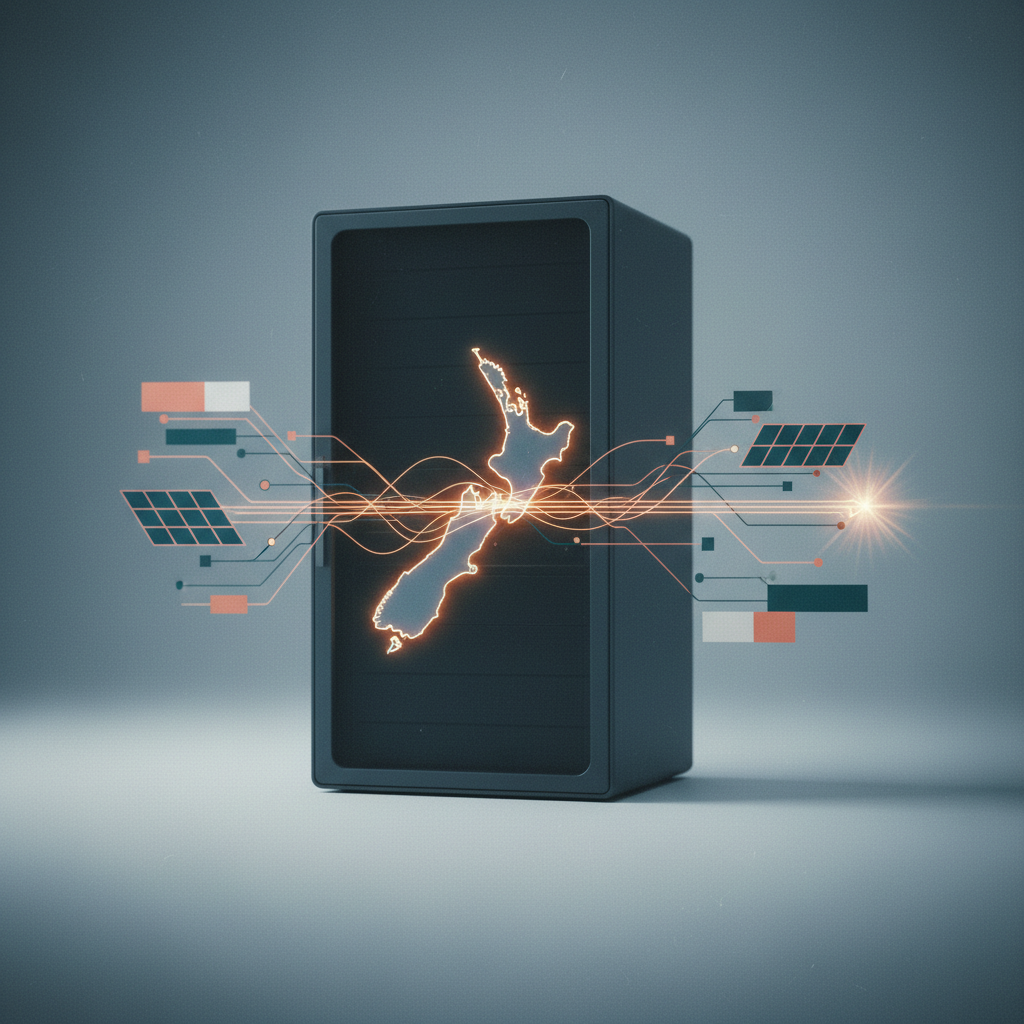

AI Infrastructure in NZ Faces Hurdles: Implications for Marketers
Datagrid's ambitious $5.1 billion Southland data centre, poised to be New Zealand's largest AI 'factory', is encountering significant challenges. These include securing adequate power supply, overcoming infrastructure costs, and navigating regulatory complexities, directly impacting the future of AI capabilities for NZ businesses.
What Happened
- •Datagrid proposes a $5.1 billion data centre in Southland, aiming to establish New Zealand's largest AI 'factory'.
- •Key obstacles identified are securing a sufficient and reliable power supply, particularly from renewable sources.
- •The project faces substantial infrastructure costs, including the development of high-speed data connectivity.
- •Regulatory approvals and environmental considerations present additional hurdles for the large-scale development.
- •Chorus has withdrawn from the Tasman Ring cable project, impacting potential international connectivity for such a facility (Source: NZ Herald - Business, 17 March 2026).
- •The data centre is envisioned to support advanced AI processing, requiring immense computational power.
Why It Matters for NZ Marketers
- •Delays or failure of this project could slow the adoption and sophistication of AI-driven marketing tools in New Zealand.
- •NZ marketers might continue to rely on offshore data centres for intensive AI workloads, potentially impacting data sovereignty and latency.
- •The availability of local, high-capacity AI infrastructure could democratise access to advanced AI for smaller NZ businesses.
- •Energy demands highlight New Zealand's unique challenge in balancing technological growth with environmental sustainability.
- •The success of such projects influences the speed at which NZ can develop its own AI talent and innovation ecosystem.
- •Reduced international cable capacity (post-Chorus withdrawal) could affect data transfer speeds and costs for global AI services.
Strategic Implications
- •Marketers should assess their current and future AI dependencies, considering potential limitations of local infrastructure.
- •Investigate hybrid AI strategies, leveraging both local and international cloud services based on data sensitivity and processing needs.
- •Advocate for robust digital infrastructure development to government and industry bodies, highlighting marketing's reliance on AI.
- •Prioritise data governance and compliance, especially if data processing occurs offshore due to local capacity constraints.
- •Explore partnerships with local tech providers who are investing in AI capabilities, even if smaller scale.
- •Budget for potential higher costs or longer timelines for implementing advanced AI solutions if local infrastructure development lags.
Future Trend Signals
- •Growing demand for local, high-performance computing will drive further investment debates in energy and fibre infrastructure.
- •The push for 'green' data centres will intensify, making renewable energy access a critical competitive advantage.
- •New Zealand's ability to attract and retain AI talent will be directly linked to the availability of advanced local infrastructure.
- •Expect increased regulatory scrutiny on data centre developments, balancing economic benefits with environmental and community impacts.
Sources
Editorial note: This analysis is original, AI-assisted editorial content. All source material is attributed with links. No full articles are reproduced. Short excerpts are used under fair dealing principles.
Related Analysis
More posts sharing similar topics
AI & CommercePolitics
Meta's European Tax Pass-Through: A Precedent for Global Ad Costs?
AI & CommercePolitics
OpenAI's Government Expansion Signals Maturing AI Enterprise Adoption
AI & CommercePolitics
Rising Diesel Costs Threaten NZ Supply Chains and Consumer Spending
AI & CommercePolitics
Drury's 'Energy Sovereignty' Vision Signals Major Infrastructure Shift for NZ Marketers
AI & CommerceProgrammatic