
NZ Media News
Back to latest




Imported Butter Sparks Origin Confusion for NZ Consumers
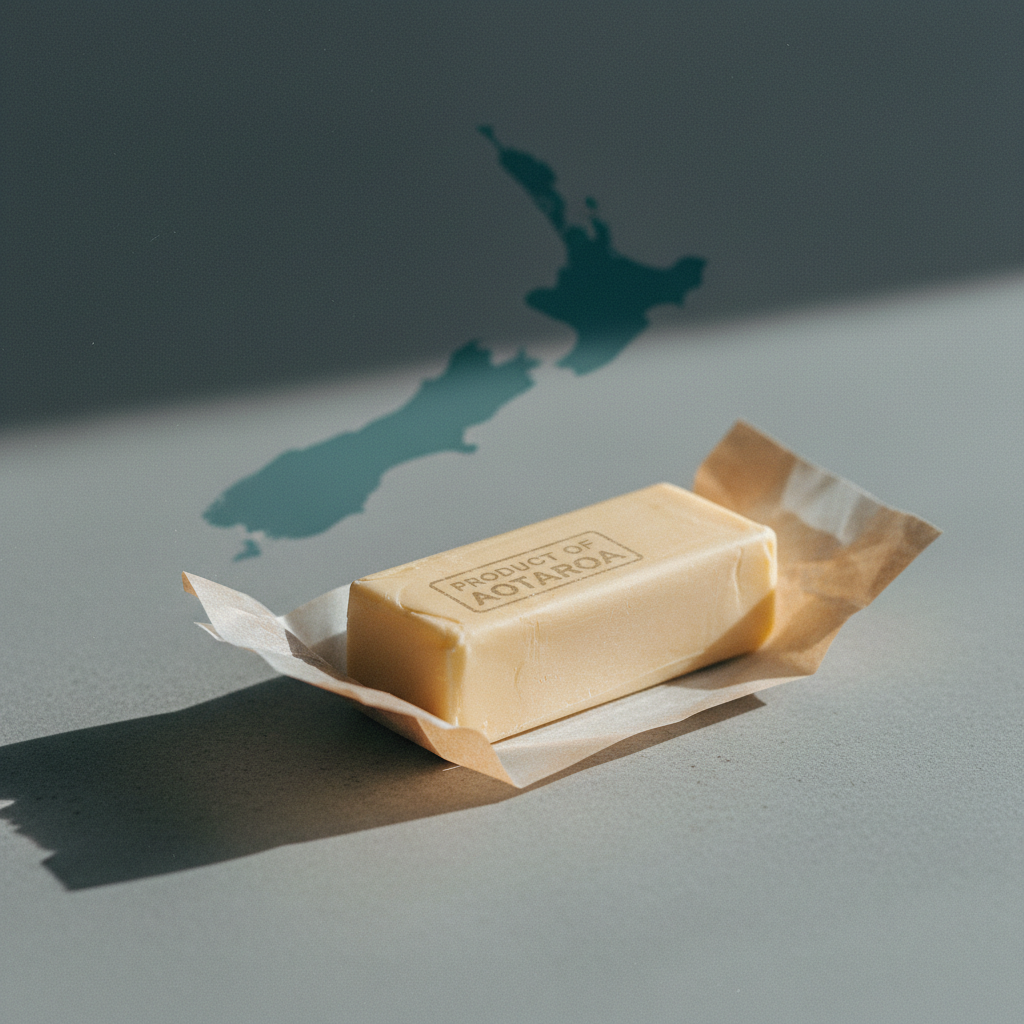
The arrival of lower-priced American butter in New Zealand supermarkets is creating consumer confusion, primarily due to unclear country of origin labelling. This highlights a disconnect between consumer expectations for local products and the realities of global supply chains and competitive pricing.
What Happened
- •American-sourced butter is now available in New Zealand supermarkets, often at a lower price point than local alternatives.
- •The presence of imported butter has led to some consumer confusion regarding its origin.
- •A key factor contributing to this confusion is the perceived difficulty in locating country of origin labelling on packaging.
- •The article implies a consumer preference for New Zealand-made dairy products, which is challenged by these imports.
- •This situation reflects the increasing globalisation of even staple food items in the NZ market.
- •The source article was published on 3 May 2026.
Why It Matters for NZ Marketers
- •NZ consumers often hold a strong preference for local dairy, impacting purchasing decisions when imported alternatives appear.
- •Brands need to ensure transparent and easily identifiable country of origin labelling to maintain consumer trust and avoid backlash.
- •Price sensitivity is evident, as lower-cost imported options can sway consumers despite local preferences.
- •This scenario presents a challenge for local dairy marketers to re-emphasise the value proposition of NZ-made products.
- •Retailers must consider how product placement and information presentation affect consumer perception and choice.
- •It underscores the competitive pressure on NZ producers from international markets, even in traditional strongholds.
Strategic Implications
- •Local brands must proactively communicate their New Zealand provenance and associated quality benefits.
- •Marketers should audit their packaging for clarity on country of origin, ensuring it meets consumer expectations.
- •Consider targeted retail media strategies to highlight local products and their unique attributes at the point of sale.
- •Develop educational campaigns to inform consumers about the benefits and origins of local versus imported goods.
- •Brands should monitor consumer sentiment regarding imported products to anticipate shifts in purchasing behaviour.
- •Retailers could explore clearer in-store signage or digital information to aid consumer decision-making.
Future Trend Signals
- •Increasing globalisation of food supply chains will continue to introduce diverse product origins into NZ markets.
- •Consumer demand for transparency and clear labelling will intensify across all product categories.
- •The balance between price sensitivity and preference for local goods will remain a critical tension point for marketers.
- •Digital tools and retail media will play a larger role in conveying product origin and value propositions.
Sources
Editorial note: This analysis is original, AI-assisted editorial content. All source material is attributed with links. No full articles are reproduced. Short excerpts are used under fair dealing principles.
Related Analysis
More posts sharing similar topics
Retail MediaAI & Commerce
Local Authors Dominate Unity Books Bestseller Charts, Signalling Enduring NZ Consumer Preference
Retail MediaAI & Commerce
Retail Media Evolves: Dollar General Integrates Onsite and Offsite Ad Inventory
Retail MediaAI & Commerce
Ulta Beauty's AI-Powered Shopping Assistant Signals Future of Retail Engagement
Retail MediaAI & Commerce
NZ Housing Market Rebound Signals Renewed Consumer Confidence
Retail MediaAI & Commerce