

NZ Media News
Back to latest



Anker's Custom AI Chip Signals Ubiquitous Local Intelligence in Consumer Tech
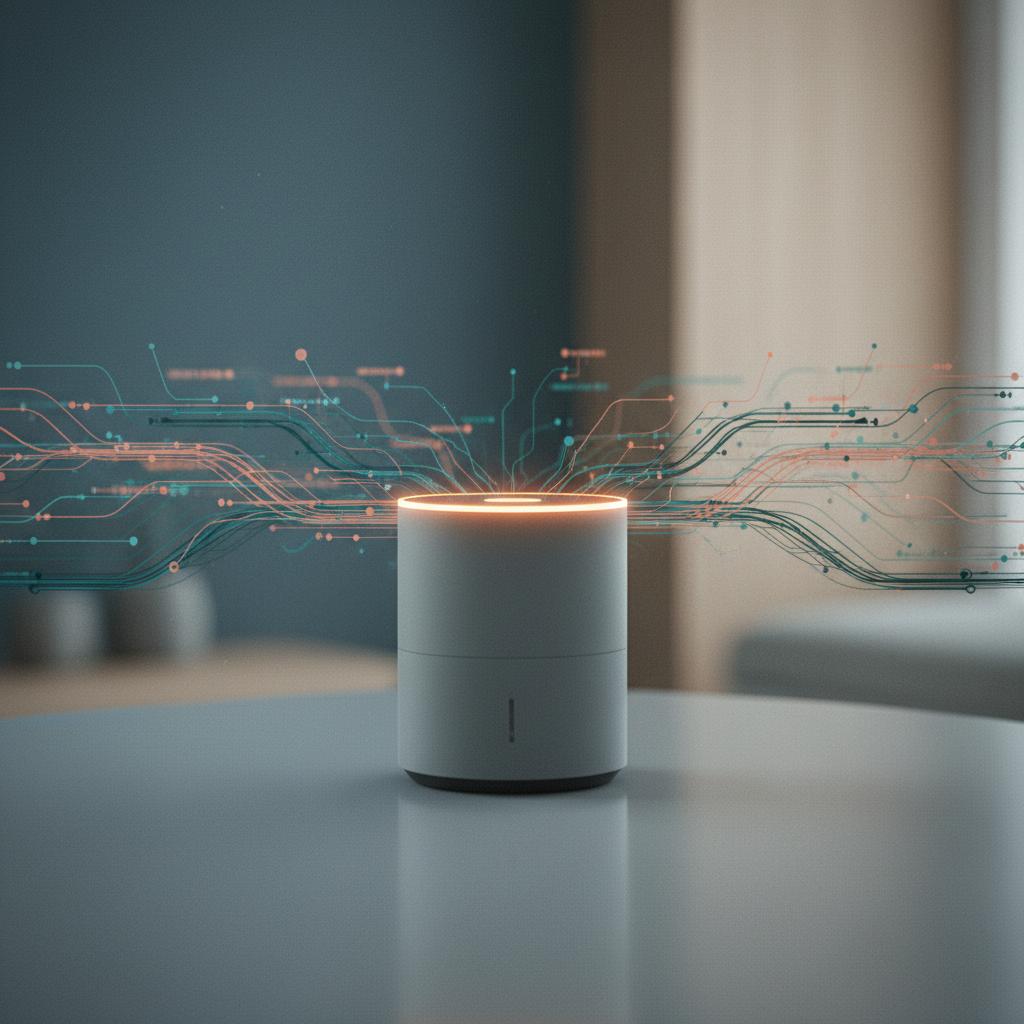
Anker has unveiled its proprietary 'Thus' AI chip, designed to embed local artificial intelligence across its diverse product range, from audio to IoT devices. This development highlights a significant shift towards more efficient, on-device AI processing, impacting future consumer electronics and user interactions.
What Happened
- •Anker announced the development of its custom 'Thus' AI processor, aiming to integrate local AI capabilities into its product ecosystem.
- •The 'Thus' chip is described as the world's first neural-net compute-in-memory AI audio chip.
- •This new silicon is designed to be smaller and consume less power than traditional chips, making it ideal for compact devices.
- •The integration of local AI will enable more sophisticated, on-device processing for audio, mobile accessories, and smart home products.
- •The initiative positions Anker to enhance user experience through real-time, privacy-centric AI functions without constant cloud reliance.
- •The announcement was made on 22 April 2026, by The Verge.
Why It Matters for NZ Marketers
- •NZ consumers are increasingly adopting smart devices; embedded AI will elevate their expectations for seamless, intelligent product interactions.
- •Marketers will need to understand the new capabilities of these devices to craft relevant messaging that highlights privacy and instant functionality.
- •The proliferation of local AI could reduce reliance on cloud-based services, potentially impacting data collection strategies for NZ brands.
- •NZ's competitive electronics market will see pressure to innovate with similar embedded AI solutions to meet evolving consumer demands.
- •Enhanced on-device processing may open new avenues for personalised audio and smart home experiences, creating novel marketing touchpoints.
- •The 'Thus' chip's efficiency could make advanced AI features more accessible in a wider range of affordable products for the NZ market.
Strategic Implications
- •Brands must prepare for a future where AI-powered features are standard, not premium, influencing product development and communication.
- •Marketing narratives should shift to emphasise the benefits of local AI, such as enhanced privacy, speed, and offline functionality.
- •Consider how embedded AI in consumer devices can create new data points or interaction models for understanding customer behaviour.
- •Explore partnerships or integrations with smart device ecosystems to leverage on-device AI capabilities for more targeted consumer engagement.
- •Invest in understanding the technical implications of local AI to effectively articulate product value propositions to a tech-savvy audience.
- •Develop content strategies that showcase practical, everyday applications of intelligent devices, moving beyond generic 'smart' claims.
Future Trend Signals
- •The shift towards 'edge AI' will make intelligent processing ubiquitous, moving AI from the cloud directly into everyday objects.
- •Consumer privacy will become a stronger selling point as local AI reduces the need for data to be sent to external servers.
- •Expect accelerated innovation in compact, energy-efficient AI chips, driving down costs and increasing adoption across sectors.
- •The user experience will become increasingly personalised and adaptive, with devices learning and responding in real-time without internet dependency.
Sources
Editorial note: This analysis is original, AI-assisted editorial content. All source material is attributed with links. No full articles are reproduced. Short excerpts are used under fair dealing principles.
Related Analysis
More posts sharing similar topics
Retail MediaAI & Commerce
Amazon's AI Bet: A Blueprint for NZ Retail Transformation
Retail MediaAI & Commerce
CTV Measurement Faces Incrementality Test as Retail Media Evolves
Retail MediaAI & Commerce
Macy's AI Assistant Signals New Era for Retail Personalisation
Retail MediaAI & Commerce
Ring's AI-Powered App Store Signals Broader Smart Home Market Expansion
Retail MediaAI & Commerce