
NZ Media News
Back to latest




NZ Exporters Push for India FTA Amidst Political Division
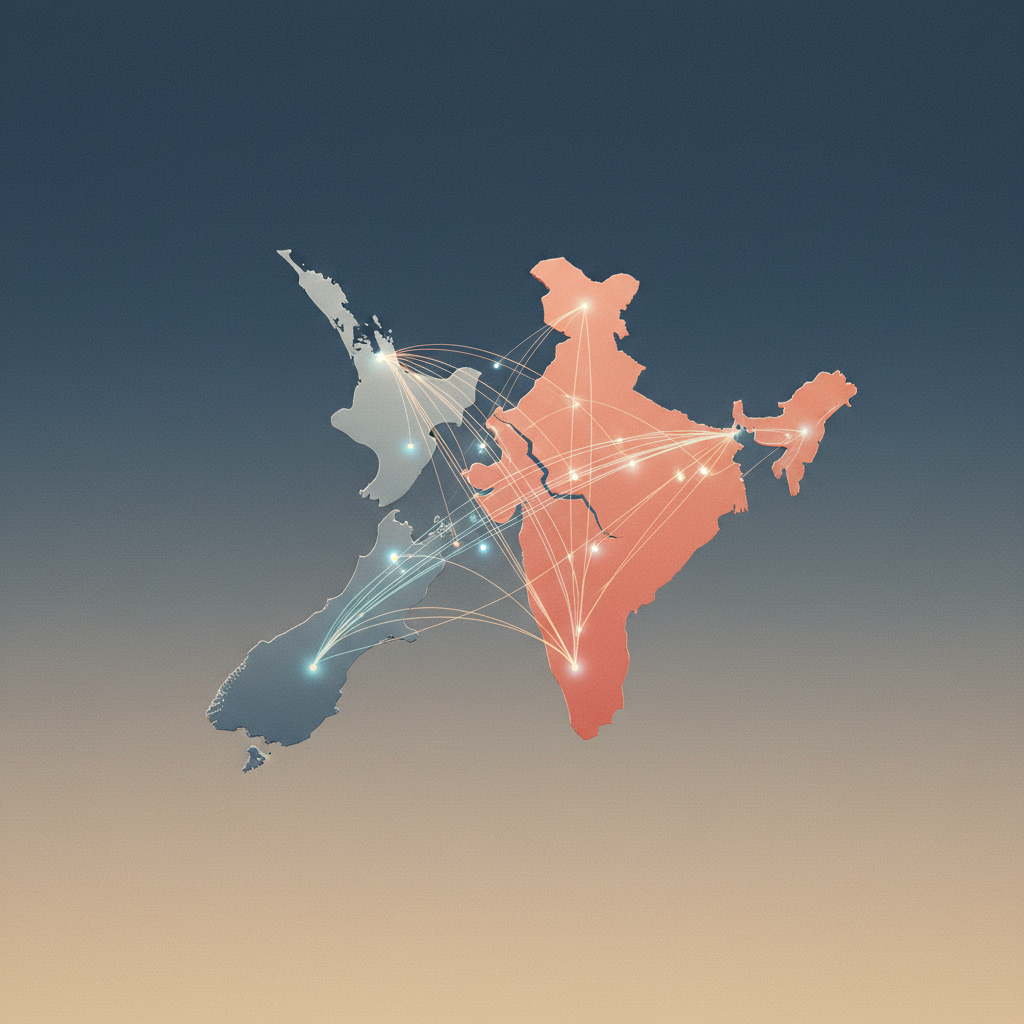
Leading New Zealand exporters are urging Parliament to support a Free Trade Agreement (FTA) with India, highlighting its strategic importance for market diversification. This push comes despite political dissent from NZ First, underscoring the complex balance between economic opportunity and domestic concerns.
What Happened
- •A collective of New Zealand's top exporters formally requested parliamentary backing for a Free Trade Agreement with India.
- •The exporters' letter characterised the potential FTA as a 'strategic necessity' for the nation's economic future.
- •NZ First has publicly expressed disagreement with pursuing the FTA, indicating political hurdles.
- •The call for an FTA with India signals a desire to expand market access beyond traditional partners.
- •The initiative aims to unlock significant export opportunities in one of the world's largest and fastest-growing economies.
- •The debate highlights differing views within New Zealand's political landscape regarding international trade priorities.
Why It Matters for NZ Marketers
- •An FTA with India could unlock substantial new market access for NZ primary producers and service providers, diversifying export revenue streams.
- •NZ marketers face the prospect of tailoring campaigns for a vast, culturally diverse Indian consumer base, requiring deep market understanding.
- •Increased trade could stimulate economic growth and job creation within New Zealand, impacting consumer confidence and spending.
- •The political debate signals potential delays or complexities in securing future trade agreements, affecting long-term market planning.
- •NZ brands could gain a competitive edge by being early movers into a market with immense untapped potential.
- •It presents a strategic imperative for NZ businesses to assess their export readiness and market entry strategies for India.
Strategic Implications
- •Marketers should begin researching Indian consumer demographics, preferences, and digital adoption rates.
- •Companies need to develop robust market entry strategies, considering e-commerce platforms and local partnerships.
- •Brand messaging must be culturally sensitive and localised to resonate effectively with Indian audiences.
- •Investment in digital infrastructure and supply chain optimisation will be crucial for efficient market penetration.
- •Businesses should advocate for government support and resources to navigate the complexities of the Indian market.
- •Diversifying export markets reduces reliance on existing trade relationships, mitigating geopolitical risks.
Future Trend Signals
- •A growing emphasis on diversifying New Zealand's export portfolio beyond traditional markets.
- •Increased focus on emerging economies as key growth drivers for NZ businesses.
- •The necessity for marketers to develop nuanced, culturally specific strategies for global expansion.
- •Ongoing political tension surrounding trade agreements, requiring businesses to monitor policy developments closely.
Sources
Editorial note: This analysis is original, AI-assisted editorial content. All source material is attributed with links. No full articles are reproduced. Short excerpts are used under fair dealing principles.
Related Analysis
More posts sharing similar topics
PoliticsBrand
Auckland's Urban Shift: Density Focus Reshapes Consumer Landscape
PoliticsBrand
NZ Business Confidence Dips Amid Global Instability, Signalling Market Caution
PoliticsBrand
US AI Regulation Debate Signals Ethical Imperatives for Global Tech Adoption
PoliticsBrand
Regional Airport Upgrades Signal New International Marketing Opportunities for NZ
PoliticsBrand